

29 Jul Living materials that capture CO₂: innovation for a sustainable future
Combating climate change requires looking beyond conventional solutions. Biotechnology is starting to offer surprising answers. Imagine a biological gel that captures CO₂ like a living organism. It’s not science fiction — it’s a new frontier in sustainability.
What are living materials?
So-called living materials are engineered structures that incorporate active biological organisms capable of interacting with their environment. Unlike traditional materials, these regenerate, adapt, and in some cases, help purify air or water.
A standout example is the photosynthetic cyanobacteria gel developed by research centers like ETH Zürich. This gel acts like a “synthetic lung,” capturing atmospheric carbon dioxide through photosynthesis.
How does this CO₂-capturing gel work?
The process is simple yet revolutionary:
- Cyanobacteria encapsulated in the gel remain active.
- When in contact with air, the gel absorbs atmospheric CO₂.
- Through photosynthesis, it converts CO₂ into oxygen, mimicking the natural behavior of plants.
This sustainable biological material can be printed in different forms and on various surfaces, opening the door to a wide range of urban, industrial, and educational applications.
Potential applications and sustainable uses
Although many of these developments are still experimental, the potential applications are vast:
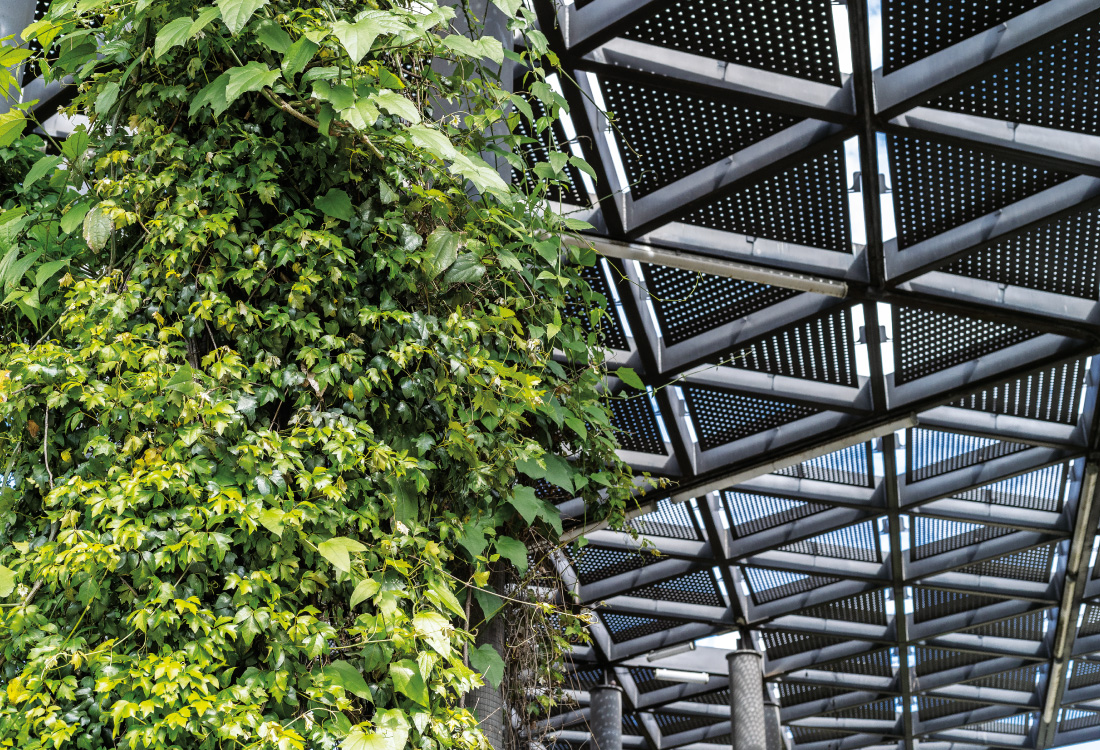
- Sustainable architecture: façades, roofs, and urban furniture that help clean the air.
- Active filters: for industries generating carbon emissions.
- Educational tools: to teach sustainability through biotechnology.
- Support in carbon footprint compensation strategies.
In the near future, these gels could be integrated into solutions like our Waste Management Web App, adding another layer of traceability and environmental impact mitigation.
Why is this innovation relevant now?
The current climate emergency calls for solutions that not only reduce but also regenerate. Using living materials as CO₂-capturing technology could become a key piece of the strategy to achieve carbon neutrality.
At Greenside Solutions, we already offer tools such as environmental dashboards and carbon footprint measurement systems that allow our clients to visualize their impact in real-time. Innovations like this could be the next step in a more proactive and restorative model.
Challenges and next steps
Of course, not everything is solved. These materials face several challenges:
- Durability and maintenance under real-world conditions.
- Biological control to ensure organism stability.
- Regulations and certification for urban and commercial implementation.
But as with all technological advances, these challenges also represent opportunities for responsible innovation.
Conclusion: active and regenerative sustainability
The future of sustainability won’t be passive. It will be living, interactive, and regenerative. CO₂-capturing living gels show us a possible path toward a planet where materials not only serve a function but actively contribute to environmental restoration.
Maybe soon, we’ll talk not just about reducing emissions, but about living surrounded by solutions that breathe with us.
Would you like to explore how your company can lead this transformation?
Contact us at sustainability@greensidesolutions.com or visit our sustainable solutions at
www.greensidesolutions.com/sustainability